Video Pm.00 20.Still001 — Grevillia AG

Silage is a fermented, ensiled fodder used as a regular and high- value feed input across Australian livestock enterprises — dairies, cattle feedlots, and grazing properties. When a forage crop is correctly ensiled, the silage produced retains protein, energy, and fibre at levels that maximise meat and milk returns. This guide covers how silage is made, the key inputs that drive silage quality, and what separates well-ensiled forage from spoiled material.

With productivity more important than ever, dairy farmers must maximize their milk production, and beef fattening enterprises must make cows maximise their daily weight gain. One of the most important inputs to improve productivity is the feed ration. In the ration, the best silage provides a source of protein and carbohydrates, and is generally the major source of fibre in the diet of cows. Nutritionists vary the relative amounts of the various components of the ration to ensure that the best possible ration is provided.

Good silage depends on getting every step right — both during growth of the fodder crop and once the crop is cut and ensiled. Making silage that ferments cleanly and stores well is governed by the following factors:

  • Timing of harvest
  • Moisture content at harvest
  • Chop length
  • Cleanliness at harvest - no dirt etc
  • Correct choice of inoculants
  • Covering and sealing
  • Face management
  • Storage choices
  • Choice of contractor

Crop Agronomy

  • Soil nutrition and fertilization for optimum yield and use
  • Choice of fodder crop and variety
  • Planting populations
  • Use of irrigation, and optimum timing of watering
  • Cleanliness of crop - weed control

Getting all these factors right is not easy, but there are some guidelines that can help. Your local rural retailer is ideally positioned to give good advice on correct agronomy for your area. Pacific Seeds are an excellent source of information on crops and varieties. Ensiling uses nature’s own process of fermentation to preserve the nutritional value and dry matter yield of a crop. It requires the right types and numbers of bacteria in the correct conditions to ensure the best fermentation process can occur in your crops. All these factors combine to produce high quality feed.

Grevillia Ag Silage Manual

Grevillia Ag can help you obtain the greatest possible returns. We can assist you with your silage program by providing in-field assistance, silage inoculants, silage protection products, product training and post-chop advice. To assist you in making the right choices, Grevillia Ag has published its Silage Manual, which provides detail on the various inputs and factors that help you to make the best possible silage harvest.

What Is Silage and How Is It Ensiled?

Silage is forage — typically maize, sorghum, cereal, lucerne, or pasture — that has been chopped, compacted, and ensiled (sealed from air) so beneficial lactic acid bacteria can ferment the sugars in the crop. The result is a stable, palatable, nutrient-rich feed that can be stored for months without significant loss.

The ensiled state is what defines silage. Once a crop is ensiled correctly:

  • Oxygen is excluded — preventing aerobic spoilage organisms from colonising the feed
  • pH drops below 4.2 — locking in nutrients and preventing further fermentation
  • Dry matter is preserved — minimising shrink between harvest and feed-out

If air gets in — through poor compaction, damaged covers, or slow face management — the silage starts to heat, mould, and lose nutritional value. That's why every successful silage program starts with the right inoculant, the right cover, and the right post-chop discipline.

FAQ

  • What does it mean for a crop to be ensiled?

    A crop is ensiled when it has been chopped, compacted, and sealed from oxygen so naturally occurring (or inoculated) lactic acid bacteria can ferment the sugars in the plant material. Once ensiled correctly, the crop is preserved as silage — a stable, palatable feed that can be stored for 12 months or more without significant nutrient loss, provided the seal stays intact.

  • How long does making silage take from harvest to feed-out?

    Making silage from harvest to feed-out typically requires 3–6 weeks for primary fermentation to complete in a well-sealed pit, bunker, or bale. The crop is chopped at the correct moisture (usually 30–40% dry matter), inoculated with a quality silage inoculant, compacted, and sealed. Most producers leave silage sealed for at least 21 days before opening for feed-out.

  • What's the difference between silage and ensiled fodder?

    There is no difference — “ensiled fodder” is the technical term for silage. Any forage crop (maize, sorghum, cereal, lucerne, pasture) that has been chopped, compacted, and sealed for anaerobic fermentation is correctly described as ensiled. Silage is simply the everyday name for the finished product.

Making Silage

Silage Contractors
We can assist you to locate a quality contractor close to you who provide a quality service.

Silage preservation
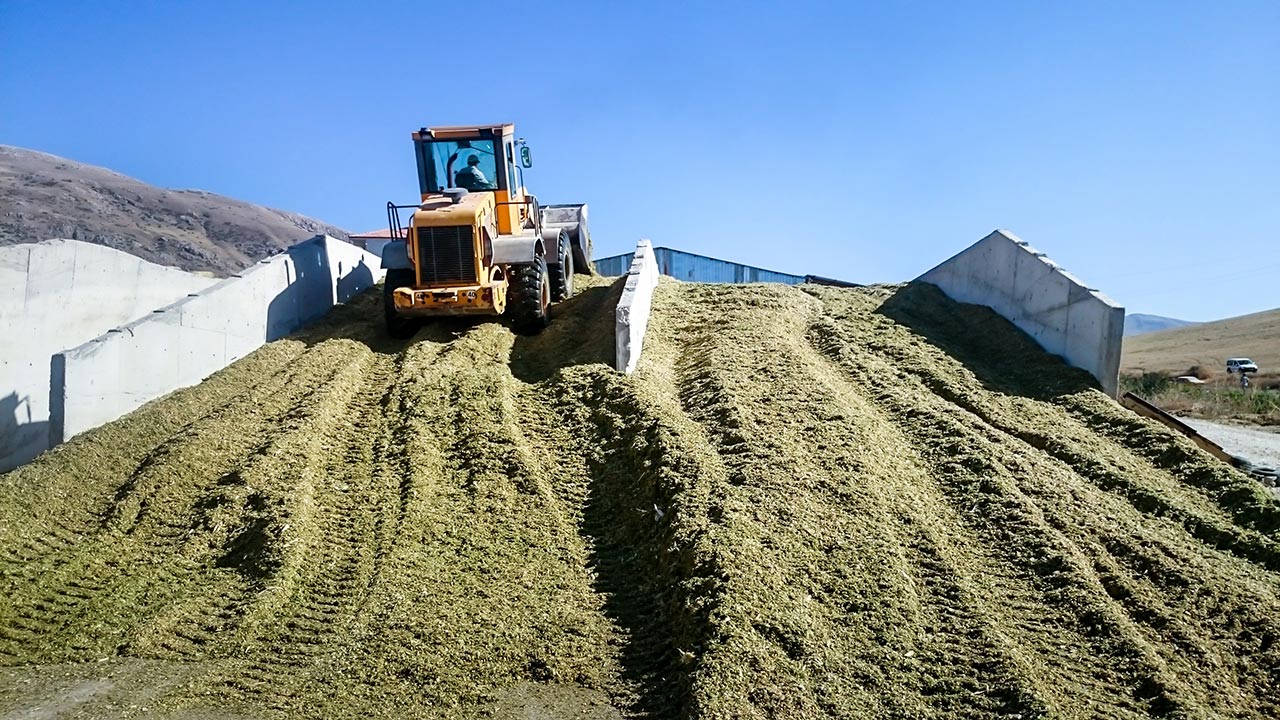
Good quality silage needs to be well compacted and sealed from air, otherwise the feed quality will degrade as the fermentation process can’t proceed properly with air around, and unwanted bacteria can grow and destroy the silage. E.g. a pit that has mould and yeasts present must have air for these bacteria to grow, so this would indicate that the pit or stack material has not been compacted and/or covered properly to exclude air.

To assist farmers in achieving a good fermentation, use of a high quality silage inoculant is recommended. There has been significant research around the world to prove that silage inoculants work. Australia is no different, and the research is as applicable to Australia as it is to Europe or the USA.

Why use a silage inoculant?

  • Improve fermentation – faster pH drop, and less heating
  • Reduce the chances of major spoilage – outcompete the spoilage bacteria
  • Prevent nutritional loss
  • Keep silage fresh for as long as possible in the pit
  • Significantly reduce secondary fermentation, or “heating at feed-out.
  • Livestock will eat the lot.

Additionally research has proven that if silage bacteria are applied freshly growing, they can assist in making better quality silage through faster action compared to freeze dried bacteria that are applied dormant. This research is shown in the following scientific papers.

Kizilsimsek M, Schmidt R J and Kung L Jr.
Effects of a mixture of Lactic Acid bacteria applied as a freeze-dried or fresh culture on the fermentation of Alfalfa silage. J. Dairy Sc. 2007. 90 5698-5705

McAllister TA, Feniuk R, Mir Z, Mir P, Selinger LB an Cheng K.-J
Inoculants for Alfalfa silage: Effects on aerobic stability, digestibility and the growth performance of feedlot steers. Livestock Prod Sc. 53:171-181

Merry RJ, Dhanoa MS & Theodorou MK
Use of freshly cultured lactic acid bacteria as silage inoculants. Grass and Forage Sc. 50:112-123

One of the biggest problems in achieving these results in commercial crop situations in the past has been the ability to have a commercial silage inoculant with a reasonable shelf life that could be applied to silage in a fresh growing state.

Technical Information on making silage

To help you with making silage, we have developed the following technical information that you can download and print to keep on hand.

One of the biggest problems in achieving these results in commercial situations in the past has been the ability to have a commercial silage inoculant with a reasonable shelf life that could be applied to silage in a fresh growing state

This is no longer the case. Grevillia Ag, through its researcher Dr John Reichelt, has developed a unique technology that enables silage bacteria to be commercially produced, freeze dried and through pre-mixing, be applied to silage in a fresh growing active state. It is Si-Lac Technology, available in the market as Si-Lacand Si-Lac Extra.

Technical Information on making silage

To help you with making silage, we have developed the following technical information that you can download and print to keep on hand.

Get in touch with us today

Advice for the agricultural world

Grevillia AG

“There must be a better way.” That was the conclusion reached by businessman and farmer John Lever on his cattle property “Grevillia”.

Address

10 Bult Dr,
Brendale QLD 4500

Phone Number

(07) 3205 1788

Customer Service

Australia: 1300 669 556
New Zealand: 0508 473 845

TOP